
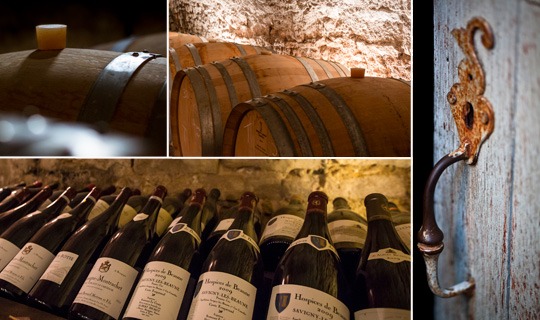
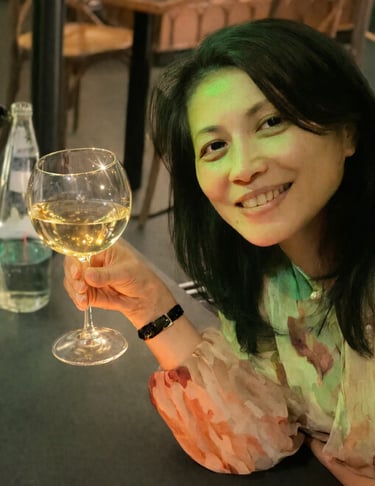
Welcome ! Here, you're invited to discover the world of a passionate Burgundy wine Specialist. I would be delighted to become your trusted partner in finding the Wines that will truly enchant You !
Cheers !
Our sourcing capabilities:
• Village, Premier Cru & Grand Cru wines from Côte de Nuits and Côte de Beaune
• Allocations from prestigious domaines: Faiveley, Trapet, Jadot, and emerging stars
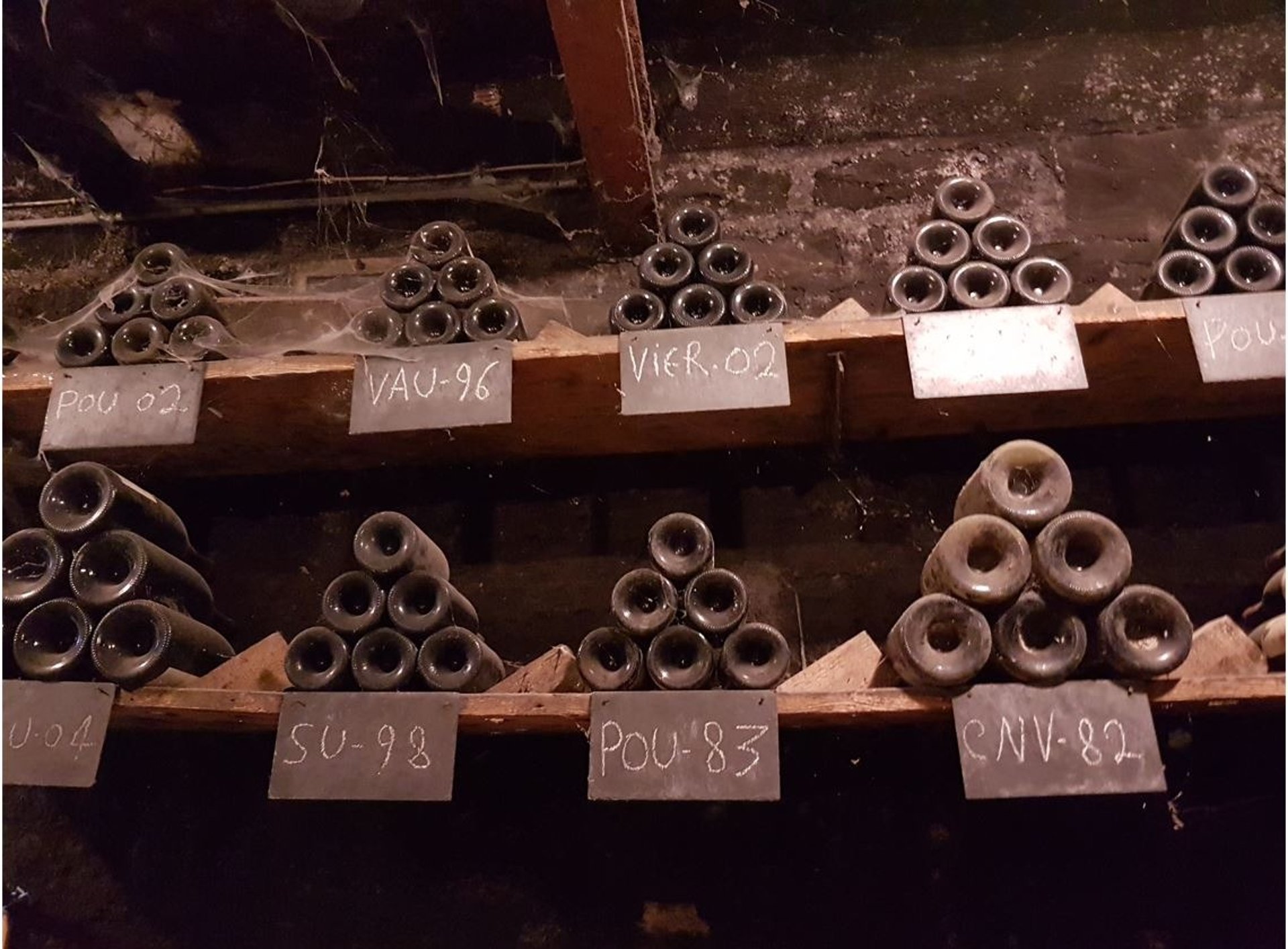
• Vintage selection - Access to current releases and select older vintages
• Volume flexibility - From 12-bottle discovery orders to 180+ bottle cellar programs
• Competitive pricing - 15-40% below Singapore retail through direct sourcing
We specialize in securing wines from Burgundy's most sought-after appellations through our established network of domaines and négociants.
We source only from producers we know personally, ensuring authenticity, proper provenance, and optimal storage conditions from vineyard to your cellar.

-> Let's discover together this World's Most Prestigious Wine Region

Why Exclusively Burgundy?
We cannot be effective everywhere - better to do one thing well than to botch ten! By focusing exclusively on Burgundy, I would be able to offer expertise that generalist merchants simply cannot match.
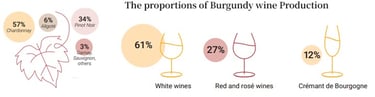
And what a region to specialize in! Burgundy is not simply a wine region – it is the absolute pinnacle of winemaking excellence worldwide. Here lie the most legendary estates on the planet, producing the world's most sought-after and expensive wines. But what makes this vineyard so exceptional? Why does it attract wine collectors and connoisseurs from around the globe?
The answer lies in a concept unique to the world: the "Climats". These precisely delimited vineyard parcels, defined over centuries, embody an incomparable viticultural philosophy where each wine expresses the soul of a specific terroir. It's thanks to this extraordinary mosaic of totally 1247 Climats that the inimitable identity of Burgundy wines has been forged. Recognized by UNESCO as a World Heritage site, this exceptional land perpetuates a millennial savoir-faire that fascinates and inspires.
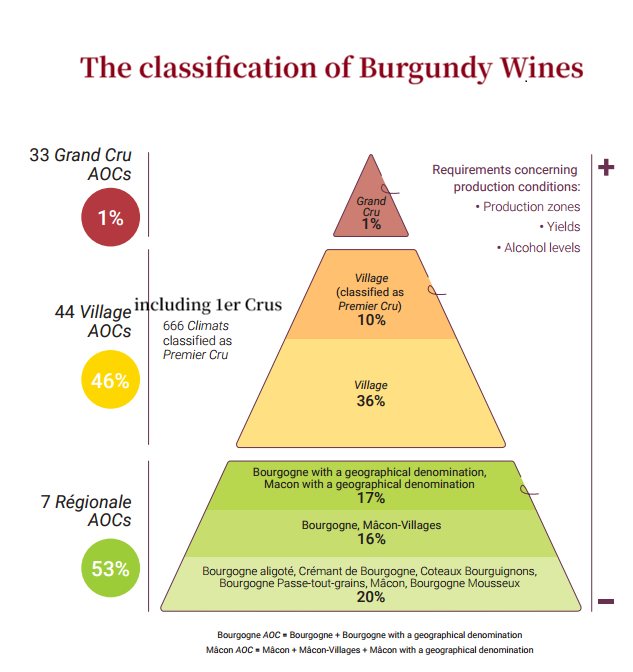
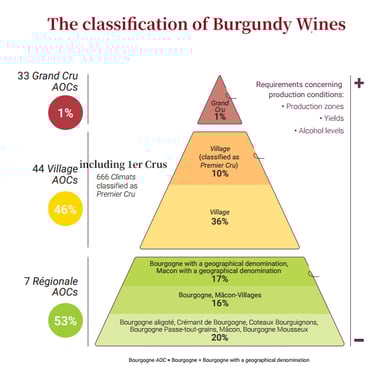
Obviously, we cannot have over 1200 names on wine labels! That's why the appellation system was created in 1935 - to group these parcels by geographical zones. Even compressed this way, the result is staggering: 84 appellations out of 375 in France - nearly a quarter of all French wine appellations concentrated in one region! Within this famous vineyard, each Climat produces wine with distinct characteristics based on:
Soil composition - Variations that can change dramatically within just a few meters
Exposition - Subtle differences in sun exposure and drainage
Microclimate - Each parcel's unique weather patterns
Historical boundaries - Centuries-old delimitations based on empirical quality observations
This creates a real labyrinth where even seasoned connoisseurs can get lost. A Grand Cru parcel might be separated from a Village-level vineyard by just a narrow path, yet command prices ten times higher.
For someone discovering Burgundy - or even experienced collectors expanding their cellars - navigating this maze without expert guidance means:
Overpaying for reputation while missing hidden gems
Misunderstanding vintage variations across different terroirs
Failing to identify emerging estates before prices rise
Making storage and aging decisions without proper context
With over 20 years of dedicated experience, I'll be your guide through this labyrinth, making your choices much more fluid and straightforward for you.
To take a journey into the captivating world of Burgundy wines and unlock the mystery of the Climats, you may clic this video link: "The Climats - Legendary Terroirs of Burgundy - A Treasure for Mankind". Enjoy !
My Wine Selection Methodology
Philosophy: The Authentic Good Deal
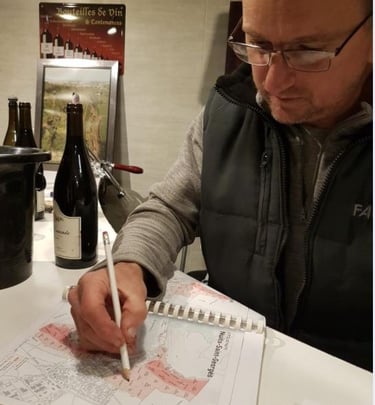
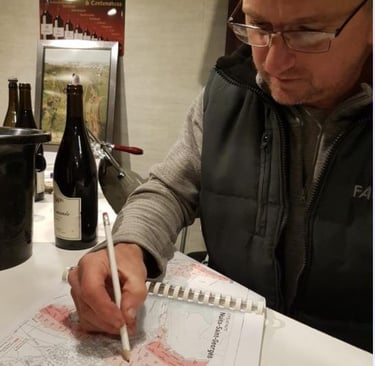
As the founder of Vinophilia — created after completing my CCIV studies (Connaissance et Commerce International des Vins) in Beaune in 2026 — and as the co‑founder of Interlux Pte. Ltd. with Amy in 2015, I have never aspired to be just a wine merchant. From my very first day in the profession, my expertise has been shaped not by theory alone, but by a genuine thirst for knowledge cultivated directly in the vineyards and cellars.
To understand a wine's true intrinsic value, I need to know
The parcel - Its terroir, soil composition, exposition, and unique characteristics
The winemaker's profile - Their history, philosophy, pathway to acquiring skills, and their commitment to quality
Their methods - How they work the vines and what they do in the cellar
What is a good deal?
For me, it's definitely not about low price (How many times have we fallen for a "not expensive" deal and ended up using the bottles in a cooking sauce? lol...) - a good deal is something more concrete and realistic. it's like a promis kept: a wine whose quality is fully worthy of its cost, and ideally one that surpasses your expectations.
My selection focuses on undervalued opportunities:
Emerging talented estates - Skilled winemakers not yet recognized by the market, offering exceptional quality at accessible prices before their reputation drives prices up
Overlooked vintages - Years that critics dismissed but that reveal remarkable aging potential and drinking pleasure, available at significant discounts
Overshadowed wines - Exceptional parcels from renowned domaines that sell for a fraction of the price simply because they're not the flagship wine, yet offer comparable quality
Strategic acquisitions - Wines positioned to appreciate in value as the market recognizes their true worth, providing both immediate enjoyment and long-term investment potential
My approach: Market trends serve certainly as a starting point and reference, but I won't stop there. Wine ages, market currents shift. Geopolitical factors have considerable impacts on wine markets (ex: we've seen this with Trump administration tariffs affecting international wine trade). Successful wine acquisition requires anticipation.
I'd like to help clients anticipate what will gain value - both gustatively and financially - in the coming years, while addressing critical questions :
Do you have proper storage conditions?
Where will you store your wines?
How will you maintain them?
What are the storage costs?
These practical considerations are essential to protecting your investment and ensuring your wines reach their full potential.
Côte Châlonnaise
Côte de Nuits & Hautes Côtes de Nuits
Côte de Beaune & Hautes Côtes de Beaune
Chablis & Côte Auxerrois
Mâconnaise
This area marks the northernmost edge of the Burgundy vineyards. Chablis and its surrounding hillsides produce some of the world’s finest dry white wines — crystalline, mineral, and internationally renowned. Here, Chardonnay reigns supreme.
A classic Chablis is defined by its dry profile, its vibrant freshness, and its unmistakable minerality. Petit Chablis, on the other hand, tends to be lighter, with notes similar to white blossoms and citrus — wines that are bright, lively, and immediately enjoyable.
At the top of the hierarchy stands Chablis Grand Cru, prized for its green‑gold hue and its perfect balance of tension, dryness, and acidity. The Premier Cru wines offer a broad aromatic spectrum, ranging from the most mineral expressions to the most floral.
In total, 47 climats may appear on the label — a remarkable mosaic that includes some of the most prestigious names: Le Clos, Grenouilles, Preuses, Valmur, Vaudésir, Bougros, and Blanchot.
Just west of Chablis lies the Côte d’Auxerre, a smaller and more discreet winegrowing area. Among its villages, Irancy stands out for its characterful Pinot Noir — wines with vibrant red‑fruit notes, a gentle tannic structure, and an excellent quality‑to‑price ratio.
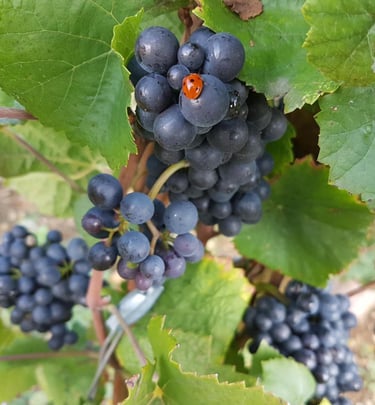
This area stretches over roughly 20 km from north to south. Côte de Nuits and is renowned above all for its red wines — dense yet elegant, refined, racy, and capable of remarkable complexity and ageing.
For centuries, the Côte de Nuits has earned the nickname “the Champs‑Élysées of Bourgogne,” a reflection of its unrivalled prestige in the hearts of wine lovers around the world. While white wines are far less common here, mostly made from Chardonnay, with a small share of Aligoté.
Its greatest treasures lie in a succession of legendary villages: Gevrey‑Chambertin (9 Grands Crus), Morey‑Saint‑Denis (5), Chambolle‑Musigny (2), Vougeot (1), Vosne‑Romanée (6, including the iconic Romanée‑Conti), and Nuits‑Saint‑Georges.
In recent decades, the two villages just south of Dijon: Marsannay and Fixin have gained growing recognition, driven in part by collective progress in organic viticulture.
Linked to the Côte de Nuits at elevations of around 300–400 meters, the Hautes Côtes de Nuits form a higher plateau (“hautes” meaning “high”). Here, both red and white wines are produced, often marked by freshness, liveliness, and bright aromatics. As climate change becomes increasingly noticeable, more growers from the Côte de Nuits are turning to this area, and decades of renewed investment have paid off. Today, the Hautes Côtes de Nuits offer some of the region’s most compelling value.
The Côte de Beaune stretches for about 20 km from north to south, seamlessly continuing from the Côte de Nuits. Both red and white wines are produced here, many of which enjoy worldwide renown. The town of Beaune, a historic heart of Bourgogne, offers a gateway to the region’s traditions.
The area includes nine Grands Crus. To the north, Corton is the only red Grand Cru, rising on the famous Corton Hill, which also shelters Corton‑Charlemagne — a white Grand Cru known for its power and depth. To the south, Meursault, Puligny‑Montrachet, and Chassagne‑Montrachet form the legendary “Golden Triangle,” home to some of the world’s greatest white wines. Four Grands Crus bear the Montrachet name: Bâtard‑Montrachet, Chevalier‑Montrachet, Criots‑Bâtard‑Montrachet, and Bienvenues‑Bâtard‑Montrachet.
The Beaune appellation, the largest in the Côte d’Or, stands out for its diversity: over 3/4 of its wines are Premier Cru, with 42 climats for red and white. Names such as Les Grèves, Clos des Mouches, Les Bressandes, and Les Teurons are especially sought after.
Pommard and Volnay also deserve attention. These two villages produce only red wines, generally more robust than those of the Côte de Nuits — fascinating to compare.
The lesser‑known satellite villages and the Hautes Côtes de Beaune — Saint‑Aubin, Saint‑Romain, Santenay, and others is equally compelling, and often far more affordable.
Too many to list here, but don’t worry: I’ll guide you through them step by step.
Red Wines
A curated glimpse into our premium Burgundy collection




Contact Us
Reach out for your personalized wine and beauty selections.
Sandy HUANG
sandyhuang@interluxsingapore.com hsansan33@yahoo.fr
Tel/WhatsApp : +33 661771327
© 2026 Interlux Ptd. Ltd. All rights reserved.
Add : 21 Tan Quee Lan Street #02-04, Heritage Place, Singapore 188108
Legal Notice
Interlux Pte. Ltd. UEN: 201530107G
Amy ZHU-SAVOYE
amyzhusavoye@interluxsingapore.com Tel/WhatsApp: +33 767035506
Wine business
Cosmetics business


WeChat QR
WeChat QR